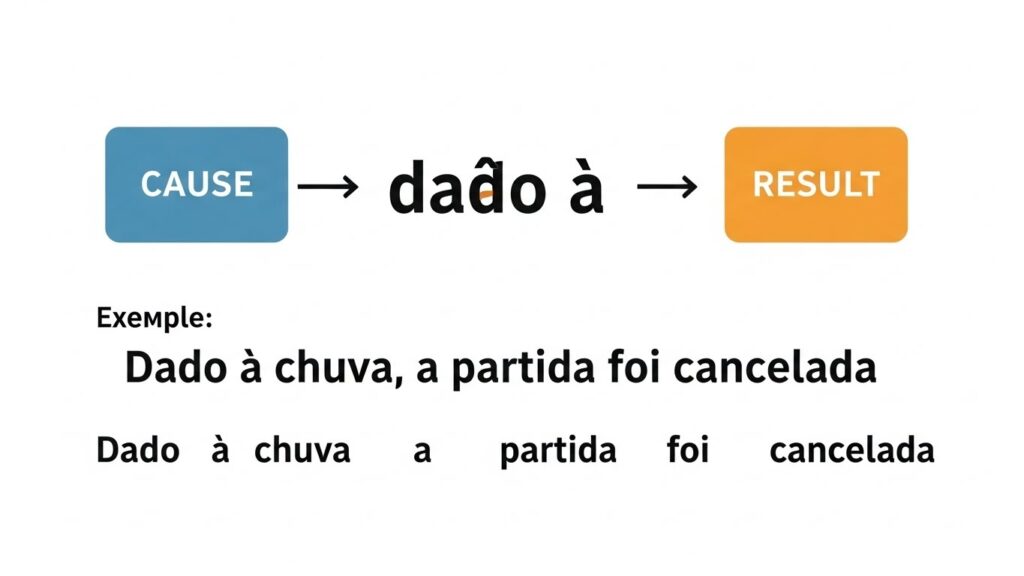
What Does “Dado à” Mean in Portuguese?
The phrase dado à is used in Portuguese to explain a reason, cause, or condition related to something. It is not just a standalone word. Instead, it works as part of a grammatical structure that connects an idea to its explanation.
In simple terms, dado à can be understood as “given to,” “due to,” or “because of”, depending on the sentence. The meaning always depends on context, not on a direct word-for-word translation.
This phrase is commonly seen in written Portuguese, especially in formal or semi-formal texts. It helps clarify why something happens or what factor influences a situation.
For example, it often appears when:
- Explaining a result
- Introducing a condition
- Connecting a cause to an outcome
The phrase works as a linguistic expression, not casual speech. Because of that, many learners misunderstand it or confuse it with similar-looking words.
It is important to note that dado à does not describe an action. Instead, it provides semantic interpretation by linking information logically within a sentence.
Understanding the phrase early helps readers:
- Avoid grammar mistakes
- Improve sentence clarity
- Read formal Portuguese more confidently
Once the meaning is clear, the grammar behind it becomes much easier to understand.
Grammatical Breakdown of “Dado à”
To understand dado à correctly, it helps to look at how each part works in Portuguese grammar. The phrase is built using standard grammatical rules, but those rules are not always obvious to learners.
At its core, dado à combines a past participle with a contracted preposition. Together, they form a structure that explains cause, condition, or attribution within a sentence.
This section breaks the phrase into two parts so the logic becomes clear and practical.
What Does “Dado” Mean Grammatically?
The word dado comes from the verb dar (to give). In this structure, it functions as a past participle, not as a verb performing an action.
Grammatically, dado behaves like an adjective. It agrees in gender and number with the noun it refers to.
Key points to understand:
- It does not show time or action
- It describes a condition that already exists
- It must match the noun it modifies
Because of its adjectival role, dado helps frame the sentence logically rather than dynamically.
Why “À” Has an Accent (à = a + a)
The à in dado à includes a grave accent, which signals a preposition contraction. This happens when the preposition a combines with the feminine definite article a.
So, à = a + a.
This accent is not optional. Without it, the meaning and grammatical correctness change. The accent shows that the phrase is pointing toward a specific feminine noun.
Important details:
- The grave accent marks grammatical structure, not pronunciation
- It clarifies sentence direction and meaning
- It follows standard accentuation rules in Portuguese
Recognizing this contraction helps readers avoid one of the most common mistakes made with dado à.
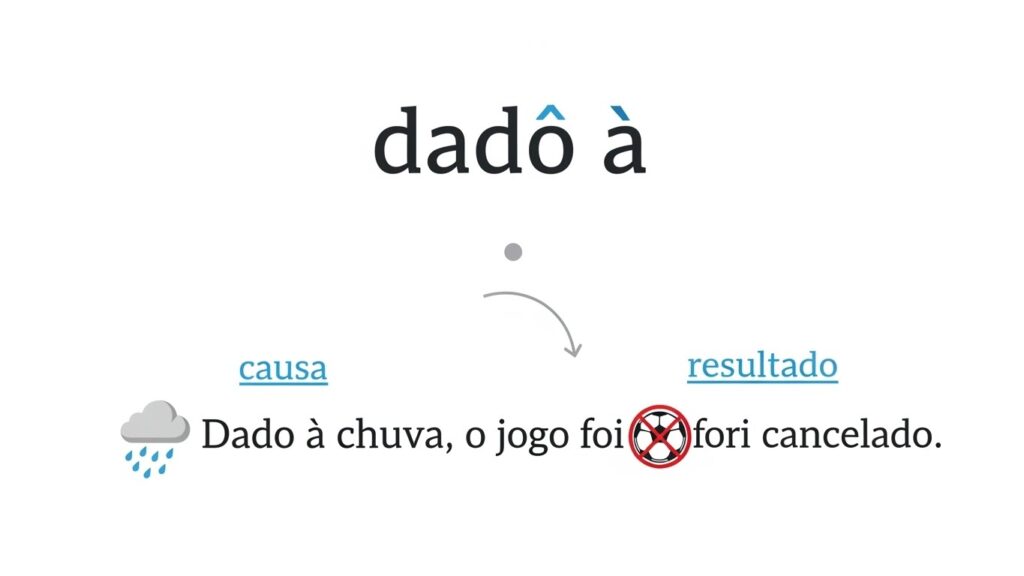
How to Use “Dado à” in a Sentence
Using dado à correctly depends on understanding its role in sentence construction. The phrase is usually placed before the reason or condition being explained. It connects an outcome to its cause in a clear and structured way.
In most cases, dado à appears in formal or neutral writing. It is more common in explanations, reports, and descriptive texts than in casual conversation.
A typical structure looks like this:
[Result] + dado à + [cause or condition]
Here are a few practical examples:
- The decision changed dado à the new information.
- The outcome improved dado à careful planning.
In each case, the phrase introduces the factor that influenced the result.
To use it properly, keep these points in mind:
- The noun after à is usually abstract or specific
- The phrase adds context rather than action
- It works best in written examples, not spoken shortcuts
Common usage tips:
- Avoid placing it at the very start of a sentence unless the structure is clear
- Make sure the noun agrees with dado when needed
- Use it to explain why, not what happened
When used correctly, dado à improves linguistic clarity and helps the reader follow the logic of the sentence without confusion.
Common Confusions and Similar Terms
Many readers struggle with dado à because it looks similar to other Portuguese words and phrases. These similarities often lead to spelling errors, grammar mistakes, or incorrect meaning. Clarifying these differences helps avoid common learner mistakes and improves overall language accuracy.
This section explains the most frequent confusions clearly and simply.
Dado vs Dado à
The word dado on its own does not mean the same thing as dado à. While dado can function as a past participle or adjective, it does not automatically explain a cause or condition.
Key differences:
- Dado → descriptive form, depends on context
- Dado à → complete phrase that introduces a reason
Without the preposition and accent, the meaning becomes incomplete. The phrase dado à adds direction and explanation that dado alone cannot provide.
Dado à vs Há Dado
A very common mistake is confusing dado à with há dado. These two forms serve entirely different grammatical purposes.
Important distinctions:
- Dado à explains cause or condition
- Há dado comes from the verb haver and expresses existence or time
Há dado relates to actions or events, while dado à connects ideas logically. Mixing them changes the sentence meaning and structure completely.
What Is “Dadoo” and Why It’s Often Confused
The term dadoo is not standard Portuguese. It usually appears due to misspelling or phonetic confusion, especially among non-native speakers.
Why this happens:
- Similar sound to dado
- Informal typing errors
- Lack of accent awareness
Understanding correct spelling helps prevent these non-standard forms from appearing in writing.
Is “Dado à” Formal or Informal Portuguese?
The phrase dado à is generally considered formal or semi-formal in Portuguese. It appears more often in written texts than in everyday conversation. Writers use it when they want to explain a cause clearly and logically.
In spoken Portuguese, especially in casual settings, people usually choose simpler expressions. However, in structured writing, dado à remains acceptable and natural.
It is commonly found in:
- Academic writing
- Reports and explanations
- Legal or administrative texts
- Formal descriptions
Because of its formal register, the phrase helps maintain a neutral and professional tone. It avoids emotional language and focuses on logical relationships between ideas.
That said, it is not outdated or incorrect. It is simply more context-dependent than casual alternatives. Using it in the right situation improves sentence precision without sounding unnatural.
Writers should avoid using dado à in:
- Informal messages
- Casual conversation
- Social media captions
Understanding the stylistic choice behind the phrase helps writers decide when it fits best. When clarity and structure matter, dado à is a reliable option.
Regional Usage: Brazilian vs European Portuguese
The use of dado à can vary slightly between Brazilian and European Portuguese, mainly in frequency and stylistic preference. While both varieties follow the same grammatical rules, some expressions are more common in one region than the other.
In European Portuguese, dado à appears frequently in formal writing, official documents, and academic texts. It maintains a precise tone and is often preferred over simpler alternatives.
In Brazilian Portuguese, writers sometimes favor phrases like devido a or por causa de in casual contexts, although dado à is still correct in formal situations. The phrase is fully understood and acceptable in professional writing, but less used in informal speech.
Key points to remember:
- Meaning and grammar stay the same
- Frequency of usage differs
- Context determines appropriateness
Understanding these regional nuances helps learners and writers apply dado à correctly depending on audience and location.
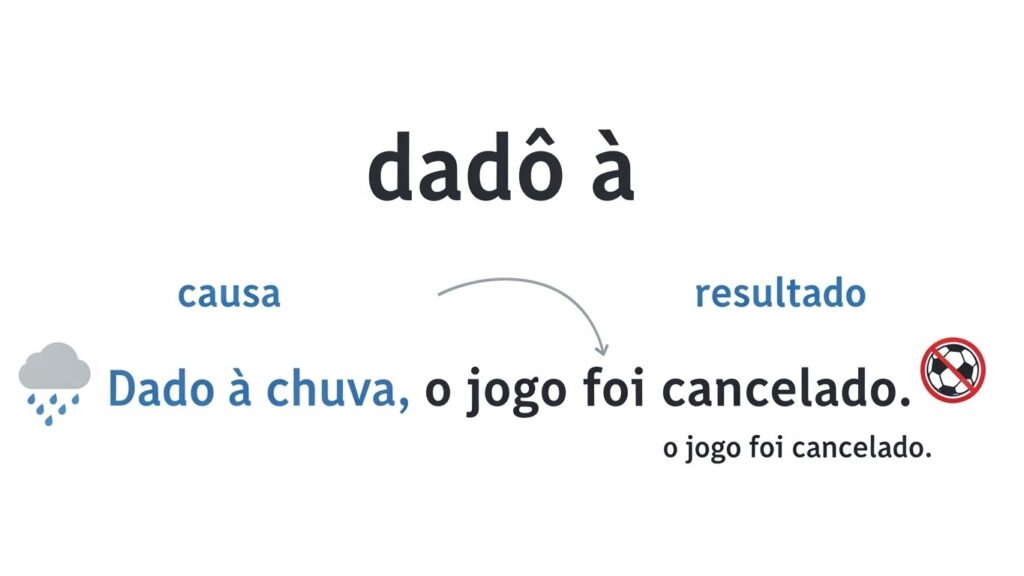
English Translation and Common Translation Mistakes
Translating dado à into English requires attention to context rather than literal word-for-word substitution. The phrase often conveys “given to,” “due to,” or “because of” depending on the sentence.
Common translation mistakes occur when:
- Translators ignore the preposition contraction
- They treat dado alone as the complete meaning
- Literal word order creates awkward or incorrect sentences
For example:
- Portuguese: A decisão foi tomada dado à nova informação.
- Correct English: The decision was made due to the new information.
- Incorrect English: The decision was made given the to new information.
Tips for accurate translation:
- Focus on semantic interpretation rather than literal words
- Identify the cause or condition the phrase introduces
- Adjust sentence structure to fit natural English phrasing
Machine translation can misinterpret dado à, especially when the surrounding context is complex. Human review ensures clarity, proper grammar, and logical flow.
By understanding these nuances, writers and translators can convey the intended meaning without confusing readers.
Alternatives and Synonyms for “Dado à”
Sometimes, using dado à might feel too formal or stiff, depending on the context. There are alternative phrases in Portuguese that can express similar ideas while fitting different tones.
Common alternatives include:
- Devido a → “due to”
- Por causa de → “because of”
- Em virtude de → “as a result of / owing to”
When choosing an alternative, consider:
- Formality: em virtude de is more formal than por causa de
- Clarity: pick the phrase that makes the cause obvious
- Sentence flow: ensure it fits grammatically with the rest of the sentence
Example:
- Original: O projeto atrasou-se dado à falta de recursos.
- Alternative: O projeto atrasou-se devido à falta de recursos.
Using synonyms can improve readability, especially for learners or non-native speakers. It also helps writers avoid repetition while maintaining the meaning introduced by dado à.
Why “Dado à” Confuses Learners (Expert Insight)
Even advanced learners of Portuguese often struggle with dado à because it combines multiple grammatical elements that are easy to misinterpret. Understanding why it confuses learners can improve both comprehension and writing skills.
Key reasons include:
- Accent sensitivity: The grave accent on à is essential. Omitting it changes meaning and can make the sentence grammatically incorrect.
- Past participle logic: Learners may not realize that dado functions as an adjective, not an action verb, affecting agreement with the noun.
- Similar-looking terms: Confusion with words like dado, há dado, or non-standard forms like dadoo adds difficulty.
Practical tips for learners:
- Always identify the noun following à to ensure agreement
- Read examples in context to see how dado à introduces a cause or condition
- Practice writing sentences using the phrase to reinforce structure
By recognizing these challenges, learners gain better insight into Portuguese grammar rules. Correct use of dado à not only improves writing but also enhances comprehension when reading formal or academic texts.
Frequently Asked Questions About “Dado à”
Here are some common questions learners and writers have about dado à, along with clear explanations.
Is “dado à” grammatically correct?
Yes. Dado à is a correct Portuguese phrase used to explain a cause or condition. The accent on à is required, as it signals the preposition + article contraction. Using it correctly ensures clarity in formal writing.
Can “dado à” be replaced with another phrase?
In many cases, yes. Alternatives like devido a, por causa de, or em virtude de can convey a similar meaning. Choose the alternative based on formality and sentence flow.
Is “dado à” still used today?
Absolutely. While it is more common in written and formal contexts, dado à remains standard Portuguese. Learners may encounter it in reports, academic texts, and professional writing.
How do I avoid confusing “dado à” with similar terms?
- Remember that dado alone is not enough; it needs à to express cause.
- Há dado is used for actions or existence, not conditions.
- Watch for misspellings like dadoo, which are incorrect.
Where does “dado à” typically appear in a sentence?
It usually comes before the noun representing the cause or condition, connecting logically to the result or explanation.
By addressing these questions, learners and writers can use dado à confidently and accurately in different contexts.